
Guest Co-Host Beats on a Locked Personal-IP Storyboard
Assign host-spine vs guest-proof beats, lock wardrobe and end cards, and know when a guest needs a solo episode instead.
Guest Co-Host Beats on a Locked Personal-IP Storyboard
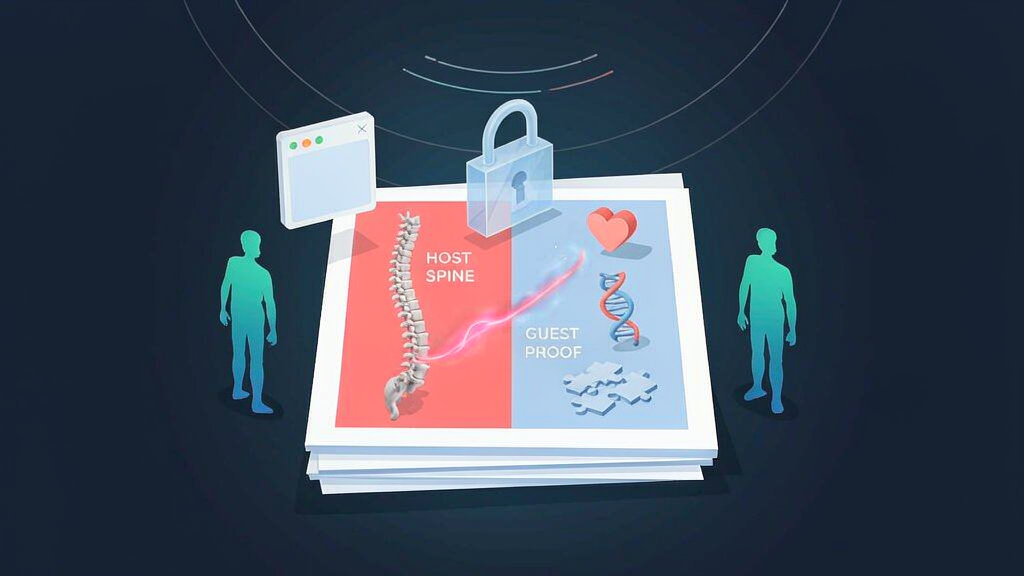
Bring a guest expert into face-led teach Reels without breaking the host brand. Lock beat roles first: the host owns the spine; the guest owns scoped proof—not a free-for-all A/B of two personal brands.
Coaches and founders building personal IP often invite collaborators for credibility. The failure mode is a visually unlocked episode: new wardrobe rules, drifting end cards, and a guest who accidentally becomes the series face for sixty seconds.
Beat roles: host spine vs guest proof
Mark every beat on the board before wardrobe or prompts:
| Beat job | Who leads on camera | Guest does | Host does |
|---|---|---|---|
| Hook / promise | Host | Optional cameo react | States the viewer job |
| Definition / frame | Host | — | Keeps series vocabulary |
| Method steps | Host (or split) | Shows one specialist step | Bridges steps |
| Proof / war story | Guest | One concrete example | Frames why it matters |
| Constraint / non-fit | Host | May add niche caveat | Protects audience fit |
| Soft next step / end card | Host | Optional wave | Series navigation lock |
If more than about 40% of spoken teach time is guest-led, you are shipping a guest episode wearing your thumbnail—not a co-host beat plan.
This is distinct from one host across product lines and from UGC-style vs studio host choices. Those decide look systems; this decides who owns which beats inside one locked board.
Wardrobe and end-card rules
Write non-negotiables on the board:
- Host wardrobe lock — palette, neckline, jewelry rules already used in the series
- Guest wardrobe guide — complementary, not twinning; avoid logos that fight your end card
- Crop / framing — same vertical safe zones for both (9:16 safe zones)
- Lower-thirds — guest name + one credential line; host lower-third style unchanged
- End card — always host series card; guest CTA only if pre-agreed and secondary
- B-roll ownership — product UI and metaphors stay on-brand; guest may supply one approved still
Hybrid face-cam + AI B-roll boards still need the same role labels so AI cutaways do not orphan the guest mid-proof (hybrid boards).
Mark host vs guest on the board
Color or tag each card: HOST / GUEST / BOTH. Style and crop locks stay consistent because regenerations inherit the tag. Soft practice: approve the tagged board before any clip render so you are not “fixing chemistry” in expensive regenerations.
When a guest should get a solo episode instead
Spin a solo (or guest-led series episode) when:
- The topic is their IP, not a proof insert into yours
- They need more than about 45–60s of uninterrupted method
- Their visual system cannot meet your wardrobe lock without looking wrong
- Legal needs separate release / disclosure for their claims
- Your audience follow is the wrong promise for their offer
Co-host beats are for your thesis + their proof. Solo is for their thesis you are platforming.
Collaboration checklist (before the shoot or gen)
- Shared intent line (one viewer job)
- Beat ownership table signed by both
- Credential line approved (no inflated titles)
- Claims checklist for guest proof (compliance claims checklist)
- End-card mock locked
- Release for face, voice, and any logos
- Fallback: if guest no-shows, host-only board still teaches
Anti-patterns
- “We’ll wing the banter” with no board
- Guest reads your entire script over your shoulder
- Two different caption fonts / brand kits in one Reel
- Hard pitch for the guest’s funnel in the last three seconds of your series
- Regenerating guest frames until they look like your AI host twin
Personal-IP systems that keep character and board locks across episodes (including storyboard-first tools like Scro) make guest inserts safer because the spine is already approved. Keep series navigation end cards host-owned so binge paths stay yours.
Sample 45–60s co-host spine
- Host hook — viewer job
- Host definition — one contrast
- Host step A–B
- Guest proof — one story or demo beat (8–12s)
- Host fail tip + soft “part of this series” end card
Measure success as brand continuity and clear proof—not whether the guest’s audience raided the comments. If comments only ask for the guest’s handle, your end card and hook failed the host spine.
Worked example: compliance guest on a ops teach
Host series teaches “how to document AI image approvals.” Guest is a lawyer friend for one proof beat: “what a review log should include.”
Board tags:
- Beats 1–3, 5:
HOST - Beat 4:
GUEST(8–10s) with approved credential line - End card: host series only; guest site mentioned verbally once, not as a competing end card
Wardrobe: host in series palette; guest in complementary neutral—no competing neon brand jacket. If the guest wants a full “AI law 101,” schedule a solo episode next month instead of hijacking this board.
Releases and claims hygiene
Store releases beside the board ID. Guest proof lines run through the same compliance claims checklist you use for your own numbers. If they cite a statute or case, prefer a neutral paraphrase over a confident wrong citation on-screen.
After publish, monitor comments for “who’s the guest?”—good—and for “this contradicted ep 2”—bad. Contradictions mean the spine definitions were not locked before the guest spoke.
One-line operating rule
Host owns the spine; guest owns scoped proof—on a locked, tagged board.