
UGC-Style Host vs Studio Host for B2B Explainers
Choose UGC-style or studio host presentation for B2B teach Reels with a decision matrix—trust, polish, platform, claim density—plus when hybrid works.
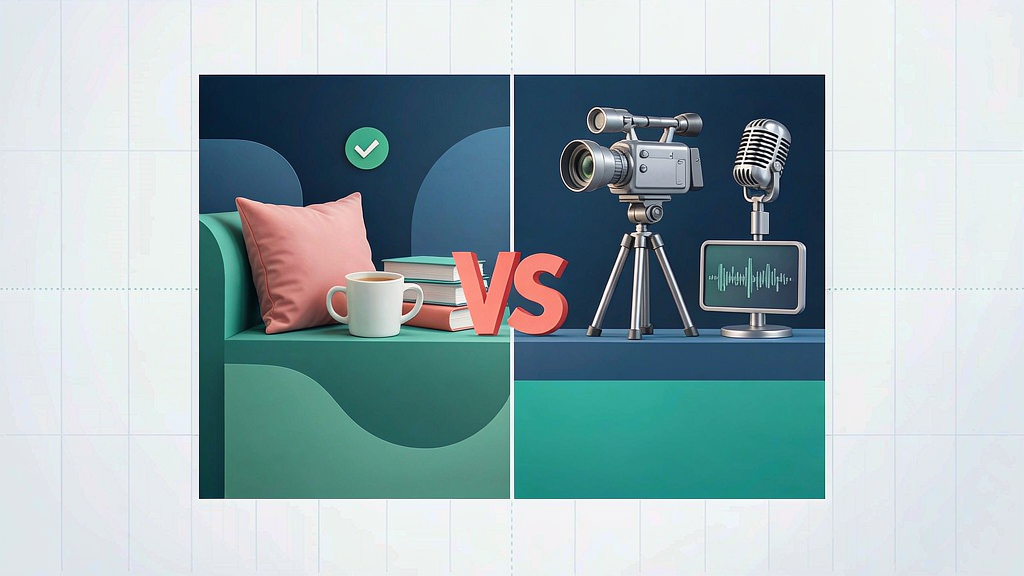
UGC-Style Host vs Studio Host for B2B Explainers
Choose UGC-style or studio host presentation for B2B teach Reels with a decision matrix—trust, polish, platform, and claim density—then lock host look and wardrobe stills before multi-clip runs. Hybrid works when you plan it on the board, not when you improvise in the edit.
"UGC" here means casual framing, handheld energy, and peer tone—not stolen creator footage. "Studio" means controlled lighting, stable framing, and higher polish. Neither automatically wins for B2B; claim density and buyer risk usually decide.
Decision matrix
Score each factor High / Medium / Low for this clip.
| Factor | If High → lean | Why |
|---|---|---|
| Peer trust / founder equity | UGC-style | Buyers want a real operator voice |
| Formal brand / enterprise polish | Studio | Procurement audiences expect control |
| Platform mute-autoplay feed | Either, with strong captions | Host style ≠ mute survival |
| Claim density (many precise facts) | Studio (or hybrid VO) | Casual delivery drops numbers |
| Regulated / high-stakes claims | Studio or plain graphics | Playful UGC can undercut safety claims |
| Multi-episode series recognition | Studio or locked UGC bible | Consistency beats one viral take |
| Speed / low production friction | UGC-style | Faster still approvals if bible exists |
| Agency multi-client reuse | Studio system | Clear templates across accounts |
Rule of thumb: high claim density + regulated risk → studio or graphics-led. High founder equity + mechanism teach → UGC-style with captions.
When hybrid works
Hybrid patterns that survive review:
- UGC hook → studio demo — peer opener, then clean UI teach
- Studio host → UGC B-roll inserts — authority VO with casual proof clips
- Graphics-led claim cards + UGC reaction — claims stay readable; personality at the edges
Hybrid fails when the host face, wardrobe, and lighting change without a bible—viewers experience it as two brands. Lock looks with a character bible or a multi-persona map before you mix.
Packaging notes by style
UGC-style
- Shorter sentences; one claim per beat
- Captions mandatory for mute and accuracy
- Show real UI crops; avoid fake "messy desk" that hides the teach
- Do not fake testimonials
Studio host
- Stable framing inside 9:16 safe zones
- Allow slightly higher claim density with on-screen numbers
- Keep gestures calm on compliance topics
- Match wardrobe stills across the series (still consistency)
Board before you cast (or generate) the host
On the storyboard:
- Mark host mode:
ugc|studio|hybrid - Attach wardrobe still references
- Write claim lines separately from performance notes (scene notes vs narration vs style lock)
- Approve muted—host charm does not excuse unreadable claims
- Only then render a multi-clip batch
Changing host mode after motion usually forces full regenerations (regeneration mistakes).
Worked examples
| Clip | Trust need | Claim density | Choice |
|---|---|---|---|
| Founder explains why labeling beats tagging | High peer | Low | UGC-style |
| Security SSO setup how-to | Medium | High | Studio or graphics-led |
| Weekly tip: invite a teammate | Medium | Low | UGC-style |
| Compliance disclaimer + eligibility | High formal | High | Studio / plain cards |
Checklist
- Matrix scored for this clip (not "brand forever")
- Host mode marked on every beat
- Wardrobe / character stills locked
- Captions planned for either mode
- Hybrid transitions planned on the board
- Stakeholder review focuses on claim/CTA, not vibes alone (review rituals)
Agency and freelancer brief lines
Include in every brief:
- Host mode (
ugc/studio/hybrid) - Bible link + wardrobe stills
- Claim density target (low/med/high)
- Forbidden improvisations ("no new outcome stats on camera")
Without those lines, freelancers optimize for charm and accidentally invent claims.
Performance notes vs claim notes
Directing "smile more" is fine; directing "say we cut costs 40%" is a claim change. Keep performance direction out of the claim field so legal reviews the right layer.
Platform skew without dogma
LinkedIn may tolerate more studio polish; short-video feeds may reward UGC energy. Re-score the matrix per placement. Do not freeze a single host mode as eternal brand law—freeze the bible, not the dogma.
AI-generated hosts
The same matrix applies when the host is generated: lock wardrobe stills, avoid unapproved photoreal professional cosplay in regulated clips, and keep claim text human-reviewed. Style freedom is not claim freedom. Approve the host still the way you would approve a casting photo—before the batch render.
Run a mute test for both host modes: if the teach collapses without audio, fix captions and claim chips before you debate whether the host should look more casual or more polished.
Document the decision in the board changelog so future editors inherit the rationale instead of re-litigating host mode or stage tags from scratch.
Soft tool note
Whatever stack you use, lock host look and wardrobe stills on the storyboard before multi-clip runs. Platforms such as Scro are built around that storyboard-first gate; the decision matrix still works in a PMM brief beside your board.