
Build a 5-Episode Micro-Series That Compounds One Thesis
Plan a five-episode teach micro-series from one thesis—five intents, a shared visual bible, and cliff/callback patterns that compound.
Build a 5-Episode Micro-Series That Compounds One Thesis
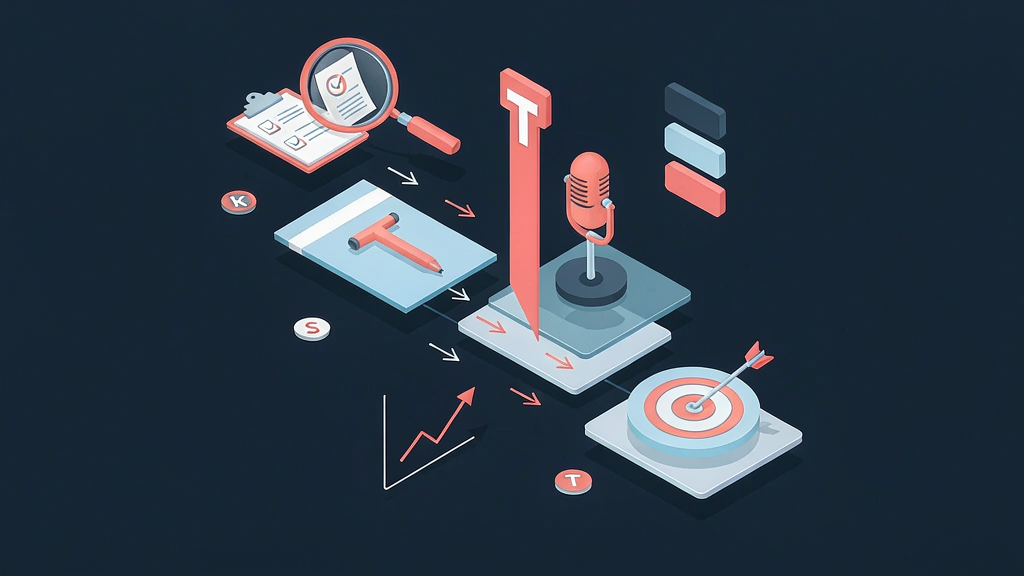
Plan a short teach series that builds on one thesis—not five disconnected one-offs—by writing the thesis, deriving five episode intents, locking a shared visual bible, and designing cliff/callback patterns before you render episode one.
One-off Reels can win a save. A micro-series wins recognition: viewers learn your vocabulary, expect the next beat, and binge with less re-explanation. Approve the series board pack once so character and style stay locked across episodes (reusable AI character bible).
Thesis → five intents
Start with one sentence a stranger can argue with:
"Support volume falls when you label intent before you assign."
Derive five episode intents that advance the thesis:
| Ep | Intent | What compounds |
|---|---|---|
| 1 | Why labeling beats tagging-everything | Problem frame |
| 2 | How to create the first three intents | Mechanism |
| 3 | How assignment uses those labels | Mechanism + proof hook |
| 4 | Gotcha: auto-assign without labels | Failure mode |
| 5 | Weekly scorecard: what to measure | Habit / CTA to ops |
If episode 3 could air without episodes 1–2, you wrote parallel one-offs. Force dependency: each episode assumes vocabulary from the prior.
Shared visual bible (approve once)
Before any episode boards go to motion, lock:
- Style family and palette
- Host / character rules and wardrobe stills
- UI metaphor rules and forbidden elements
- Hook card layout and CTA shelf position
- Caption treatment
Reuse still language so the series is recognizable in a mute scroll. Consistency tips for multi-scene stills apply across episodes (character still consistency). Multi-persona systems are optional; if you use them, map persona to episode role deliberately (multi-persona content system).
Cliff and callback patterns
| Device | How to use | Example |
|---|---|---|
| Cliff | End with an open operational question | "Tomorrow: what breaks if you auto-assign first?" |
| Callback | Reuse a visual token from ep1 | Same "intent chip" icon in every demo |
| Recap chip | 3-second prior-thesis reminder | Opening card: "Label → then assign" |
| Vocabulary lock | Same term every time | Always "intent," never alternating "topic/tag" |
Cliffs without callbacks feel like cliffhangers for drama's sake. Callbacks without cliffs feel like remakes.
Sample series outline (45s each)
Use pacing templates so lengths stay comparable.
- Why: contrast tagging-all vs intent-first
- How intents: demo "New intent" modal
- How assign: demo rule row
- Gotcha: warning toast + recovery
- Measure: scorecard fields (no invented benchmarks)
Ship on a fixed cadence (e.g., Mon/Wed/Fri + next Mon/Wed). Point CTAs to the next episode and to docs—not only to pricing.
Production order
- Approve thesis + five intents
- Approve bible
- Board all five still packs
- Stakeholder ritual once on the pack (review rituals)
- Render in order; do not "improve" the host mid-series
Storyboard-first keeps regenerations local (storyboard-first vs generate-then-fix).
Checklist
- Thesis sentence written and stress-tested
- Five intents with explicit dependencies
- Shared bible approved
- Cliff/callback plan per episode
- Single stakeholder review on the pack
- Vocabulary glossary (10 words max)
Thesis stress tests
Before you greenlight five episodes, ask:
- Can a skeptic disagree with the thesis? (If not, it is a slogan.)
- Does each episode require prior vocabulary?
- Would episode 5 still matter if episode 2 flopped? (If yes, dependencies are weak.)
Weak theses create five tips. Strong theses create a curriculum.
Publishing and playlist hygiene
- Pin episode 1 while the series runs
- Use identical cover templates with episode numbers
- Add "Previous / Next" links in descriptions
- Retire conflicting older one-offs that contradict the thesis
A messy archive fights compounding: viewers land on a contradictory orphan clip and bounce.
Resource budget
Estimate still approvals and renders for five boards up front. Teams that "see how episode 1 does" before boarding the rest often change the host mid-flight and destroy recognition. Board the pack; release on data; do not redesign identity between episodes 2 and 3.
Callback asset kit
Prepare once:
- Intent chip icon
- Three recurring color tokens
- End-card template with episode number slot
- Recap line font treatment
Store the kit with the bible. Episode editors who reinvent icons each week quietly destroy compounding even when the script is perfect.
Soft failure recovery
If episode 2 underperforms, do not scrap the thesis. Diagnose hook and clarity on that board, ship a revised still pack, and keep episodes 3–5 on the same spine. Series compound only if you protect the spine under noise.
Keep a one-page series map visible in every episode brief: thesis, episode number, dependency ("requires ep2 vocabulary"), and callback asset checklist. Invisible maps produce accidental one-offs dressed as a series.
Soft tool note
Whatever stack you use, approve a series board pack once so character and style stay locked across episodes. Platforms such as Scro are built around that storyboard-first gate; the thesis→five-intents table still works in a series bible doc.