
Pacing Templates for 30 / 45 / 60-Second Teach Reels
Pick beat density by length before writing scenes—timing grids for hook, promise, proof, and CTA with word-count ranges for 30, 45, and 60 seconds.
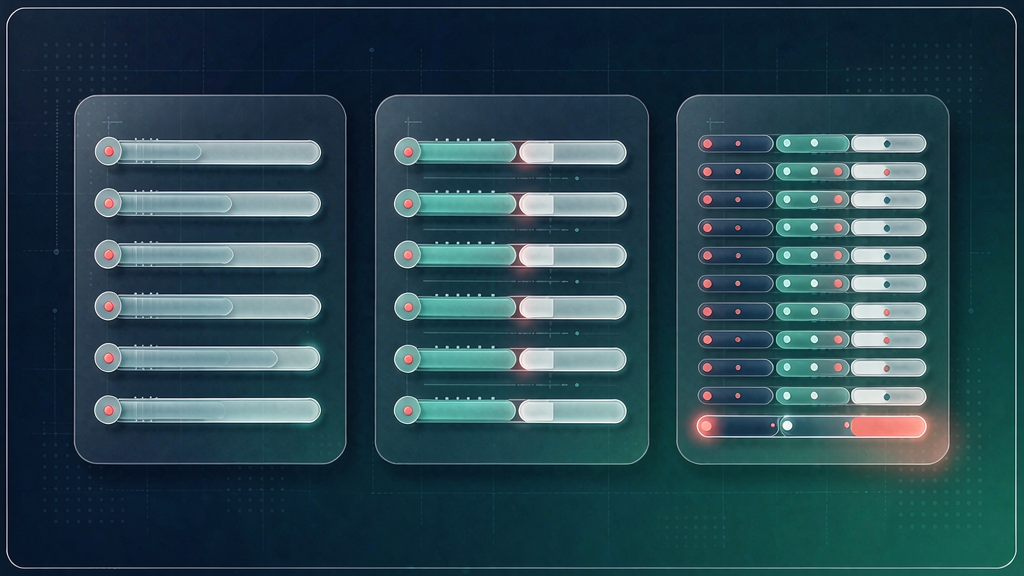
Pacing Templates for 30 / 45 / 60-Second Teach Reels
Pick beat density by length before writing scenes. Timing grids for hook / promise / proof / CTA beat “keep it short” advice. Vertical explainer marketers regenerate less when every second already has a job on the board.
Length is not a vibe. A 30-second Reel is not a compressed 60—it is a different outline.
Shared structure (all lengths)
Every teach Reel still needs four jobs:
- Hook — name persona + friction
- Promise — what they will be able to do/know
- Proof — show mechanism or mini example
- CTA — one next step
What changes with length is how many proof beats and word budget.
Timing grids
30 seconds (~70–90 spoken words)
| Window | Job | VO words | Notes |
|---|---|---|---|
| 0–3s | Hook | 8–12 | Must work muted |
| 3–8s | Promise | 12–18 | One outcome only |
| 8–24s | Proof | 35–45 | One mechanism, no side quests |
| 24–30s | CTA | 8–12 | Callback noun |
45 seconds (~110–140 spoken words)
| Window | Job | VO words | Notes |
|---|---|---|---|
| 0–3s | Hook | 8–12 | Same discipline as 30s |
| 3–10s | Promise | 15–22 | Add who it’s for |
| 10–35s | Proof (2 beats) | 55–70 | Mechanism + mini example |
| 35–45s | CTA / recap | 12–18 | Recap ≤8 words on screen |
Use with a 45-second scene-by-scene checklist.
60 seconds (~150–180 spoken words)
| Window | Job | VO words | Notes |
|---|---|---|---|
| 0–3s | Hook | 8–12 | Do not “warm up” |
| 3–12s | Promise + stakes | 20–28 | Why it matters now |
| 12–48s | Proof (3 beats) | 85–110 | Mechanism, example, guardrail |
| 48–60s | CTA + loopable end | 15–22 | One verb |
If you need a fourth proof idea, you need a second Reel—not a longer take.
Word-count ranges vs reality
Spoken pace varies. Time a cold read with a phone timer. If you overrun a window, cut nouns—not adjectives first. Pair VO with on-screen text intentionally (voiceover vs on-screen text).
Hooks still must land under three seconds regardless of total length (SaaS feature hooks).
Choosing length by intent
| Intent | Prefer | Why |
|---|---|---|
| Single myth-bust | 30s | One claim |
| Feature mechanism | 45s | Room for mini example |
| Objection + guardrail | 60s | Need constraint beat |
| Multi-feature tour | Split | Do not force into 60s |
Aspect ratio is independent—choose it before locking the grid (9:16 vs 16:9 vs 1:1).
Storyboard against the grid
Write scene cards that map to windows. When something fails in render, regenerate only the window that broke—same local-fix idea as storyboard-first workflows and regeneration mistake avoidance.
Cold-read protocol
- Print the VO only
- Read aloud with a timer, no heroics
- Mark where you gasp or rush
- Cut or split before adjusting style
If the cold read fails, the grid is wrong—motion will not save it.
Proof-beat library (plug into grids)
| Proof type | Fits | Avoid packing with |
|---|---|---|
| Mechanism diagram | 30–60 | Long case story |
| Mini example | 45–60 | Second example |
| Guardrail / constraint | 60 | Hook jokes |
| Before/after cards | 30–45 | Tiny UI text |
Pick proof types that match length. A 30s Reel with mechanism + example + guardrail will sound auctioneer-fast.
Platform posting notes (without invented metrics)
Different surfaces reward completion differently, but your board should still teach cold. Do not stretch to 60s because “the algorithm likes longer” without a third proof beat that earns the seconds. Empty seconds train scroll-aways.
Hook density is not proof density
Creators sometimes “fix a weak middle” by writing a louder hook. Hooks can improve retention into second three; they cannot teach a missing mechanism. If proof is thin, lengthen the proof window or cut to a shorter total length—do not decorate the opening.
CTA timing mistakes
| Mistake | Fix |
|---|---|
| CTA at 0:08 | Too early; teach first |
| CTA only spoken, never shown | Add on-screen verb |
| Three CTAs | Pick one destination |
| CTA introduces new feature | New Reel |
The CTA window exists to route—not to teach a second concept.
Field note 1
When this workflow feels slow, remember regenerating motion for unclear intent is slower. Spend the minutes on the board: nouns, timing, and approval owners. The publish cadence stays weekly only if the control documents stay boring and current.
Field note 2
When this workflow feels slow, remember regenerating motion for unclear intent is slower. Spend the minutes on the board: nouns, timing, and approval owners. The publish cadence stays weekly only if the control documents stay boring and current.
Field note 3
When this workflow feels slow, remember regenerating motion for unclear intent is slower. Spend the minutes on the board: nouns, timing, and approval owners. The publish cadence stays weekly only if the control documents stay boring and current.
Soft tool note
Whatever stack you use, storyboard against a pacing grid so regenerations stay local. Platforms such as Scro are built around approving that board before render; the 30/45/60 templates above work in any shot list.