
Fabric Texture, Not Plastic Clothes
Name the cloth. Cotton, wool, and linen wrinkle. A prompt that only says outfit tends to render plastic.

Fabric looks real when you name the cloth and let it misbehave. Cotton wrinkles at the elbow. Wool has a nap. Linen creases. Leather has a dull grain, not a wet shine. "Stylish outfit" is how clothes turn into smooth plastic with no weave. The face can be locked and still look fake if the shirt looks poured.
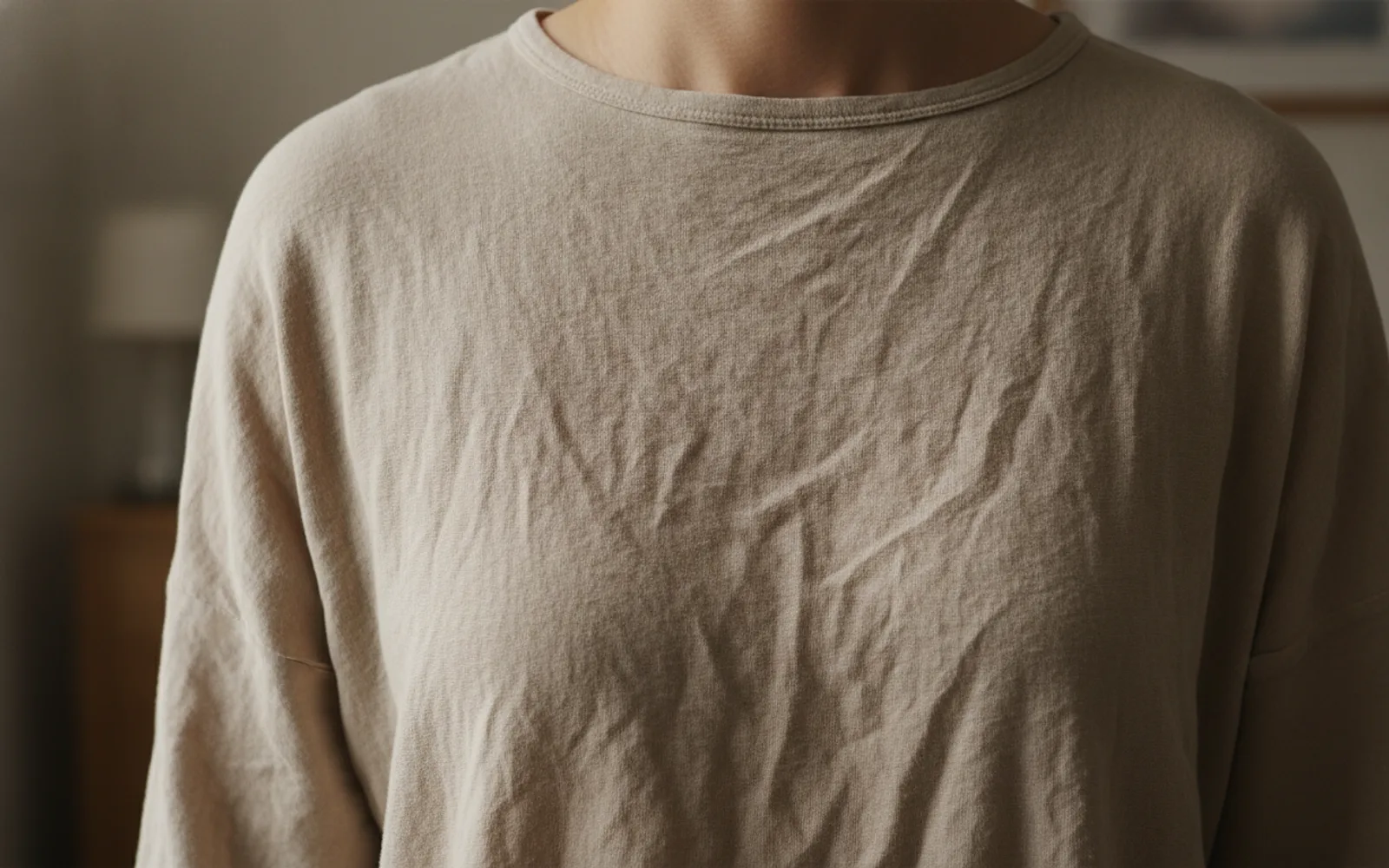
Name one material
"Washed grey cotton, wrinkles at the elbow, matte" is enough. Stacking silk, leather, and armor in one sentence makes a costume, not a Tuesday. Repeat that one cloth in later stills so the week matches.
Kill the shine
Ask for matte unless the garment is actually satin. A highlight running down a t-shirt like a car hood is plastic. Window light should break on the folds, not slide off a smooth surface.
Seams and weight
A collar has a thickness. A sleeve pulls at the shoulder. If the shirt looks painted on, with no hem and no pull, reject the still. Clothes that ignore gravity will ignore the body once they move.
A worked example
Same host, same grey cotton shirt, elbow crease, collar slightly uneven. A shiny "fashion" version is rejected even though the face matched.
Check the still
- The cloth is named.
- Folds break the highlight.
- The hem and collar have thickness.
Where Scro fits
Scro can change wardrobe without changing the locked face, including a pose edit that swaps a top and keeps the head. Describe the cloth in that change. Approve the still if the new shirt turns to plastic.
Name the cloth before you render. Finished samples are on the examples page.
Related: Hair Edges Against a Bright Window.