
SEO GuidePersonal BrandCreator IPExplainer Reels
How Creators License Their Expertise as Branded Explainer Libraries
Creators license their expertise as branded explainer libraries by packaging their short teach clips, boards, and stills into a cohesive set that can be…
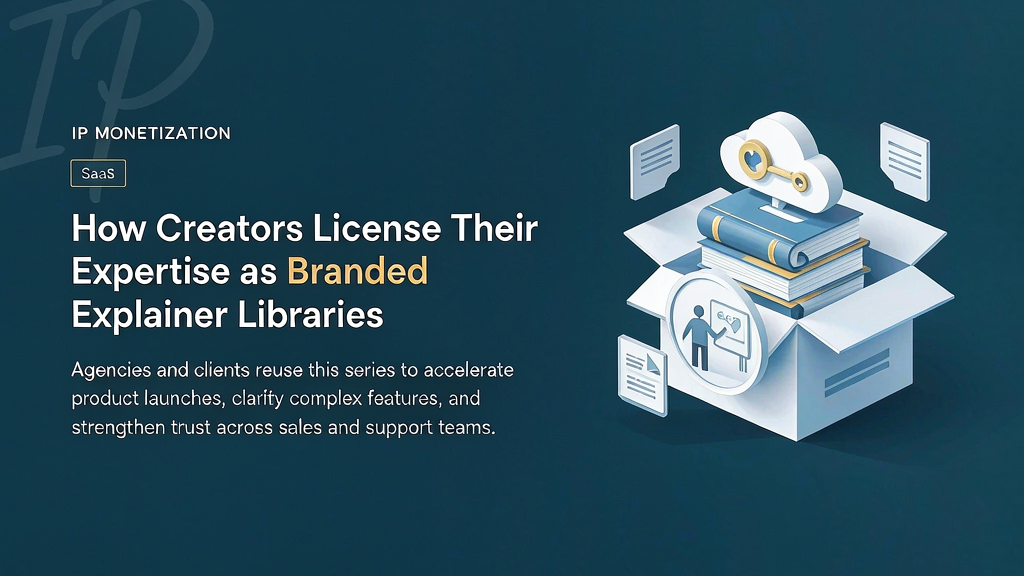
How Creators License Their Expertise as Branded Explainer Libraries Creators license their expertise as branded explainer libraries by packaging their short teach clips, boards, and stills into a cohesive set that can be used by brands or institutions under a set of predefined rules. This approach allows creators to monetize their intellectual property (IP) and scale their reach beyond one-to-many social media engagements. By licensing their explainer library, creators can establish a B2B IP revenue stream, where brands pay to use their content under specific terms.
What are the Key Components of a Branded Explainer Library? A branded explainer library typically consists of a set of short teach clips, boards, and stills that are designed to convey a creator's methodology and expertise. The library should have a consistent visual system, a named and documented framework, and a sample set of 8-20 explainers that demonstrate the quality of the content. Additionally, the library should have a clear legal skeleton that outlines the scope, territory, exclusivity, moral rights, and takedown procedures.
What are the Prerequisites for Licensing a Branded Explainer Library? To license a branded explainer library, creators should have the following prerequisites in place: A named and documented framework that outlines their methodology A consistent visual system that ensures all content looks and feels the same A sample library of 8-20 explainers that prove the quality of the content A legal skeleton that outlines the scope, territory, exclusivity, moral rights, and takedown procedures * Support expectations in writing that clarify the level of support the licensee can expect
Without these prerequisites, creators risk selling freelancing services under a fancier name, rather than licensing a valuable IP asset.
What are the Different Types of Licenses for Branded Explainer Libraries? There are several types of licenses that creators can offer for their branded explainer libraries, including: Time-boxed brand use in paid social media campaigns Internal training only, where the licensee can use the content for internal training purposes White-label vs clearly attributed, where the licensee can choose to use the content with or without attribution Territory or language limits, where the licensee can only use the content in specific territories or languages * Renewal and update fees, where the licensee pays a fee to renew their license or receive updates to the content
| License Type | Description | Benefits |
|---|---|---|
| Time-boxed brand use | Limited use in paid social media campaigns | Predictable revenue, controlled brand exposure |
| Internal training only | Use for internal training purposes | Controlled brand exposure, predictable revenue |
| White-label | Use without attribution | Flexibility for licensee, potential for higher revenue |
| Clearly attributed | Use with attribution | Transparency, potential for higher revenue |
| Territory or language limits | Use in specific territories or languages | Controlled brand exposure, predictable revenue |
| Renewal and update fees | Pay to renew or update license | Predictable revenue, potential for higher revenue |
What are the Production Implications of Licensing a Branded Explainer Library? To license a branded explainer library, creators need to ensure that their production pipeline can reproduce high-quality content consistently. This means having a clear storyboard, still lock, and render process in place, as well as predictable specs for aspect ratios, caption files, brand-safe claims, and version stamps. Additionally, creators should consider the opportunity cost of exclusivity and price their licenses accordingly.
How do Creators Go-to-Market with their Branded Explainer Library? Creators can go-to-market with their branded explainer library by: 1. Outbound marketing to heads of L&D, brand, or creator partnerships with a sample reel and one-pager 2. Productizing a self-serve tier of non-exclusive clips 3. Starting narrower than they think, with a focus on a specific niche or industry
What are the Ethics and Control Considerations for Licensing a Branded Explainer Library? When licensing a branded explainer library, creators should consider the following ethics and control issues: Refusing categories that conflict with their advice or values Maintaining approval on claim changes Disclosing training data or AI usage if material to the buyer Keeping kill-switch rights for misuse of their likeness if face or voice is included
Worked Example: Licensing a Branded Explainer Library for Customer Onboarding Let's say a creator has developed a branded explainer library for customer onboarding, with 10 short teach clips and 5 boards. The library is designed to help businesses improve their customer onboarding process, and the creator wants to license it to a large enterprise. The creator has a named and documented framework, a consistent visual system, and a sample library that demonstrates the quality of the content. The creator also has a clear legal skeleton and support expectations in writing. The enterprise is interested in using the library for internal training purposes, and the creator is willing to offer a time-boxed brand use license. The license agreement outlines the scope, territory, exclusivity, moral rights, and takedown procedures, and the creator is able to negotiate a fair price for the license.
Ship Checklist for Licensing a Branded Explainer Library Here is a concrete ship checklist for licensing a branded explainer library: Develop a named and documented framework Create a consistent visual system Produce a sample library of 8-20 explainers Establish a clear legal skeleton Define support expectations in writing Determine the license type and terms Develop a go-to-market strategy Negotiate the license agreement Deliver the licensed content Monitor and enforce the license terms
Related reading on Scro
- Face, Voice, Expertise: Three Assets Creators Monetize (Ethically)
- How Consultants Productize Their Frameworks Into Explainer Series
- Personal Brand IP Monetization: How Creators Turn Expertise Into Income
- Sponsorship Briefs Creators Should Send (With Explainer Sample Reels)
Soft close — storyboard-first workflow
Prefer concept → storyboard → approve stills → render over prompt-and-pray generation. If you want that loop productized, try Scro. The operating rules above still apply with any stack that lets you lock beats before motion credits burn.