
SEO GuidePersonal BrandCreator IPExplainer Reels
Personal IP Protection Basics for Creators Using AI Video Tools
To protect your personal intellectual property (IP) when using AI video tools, it's essential to understand the potential risks involved, such as…
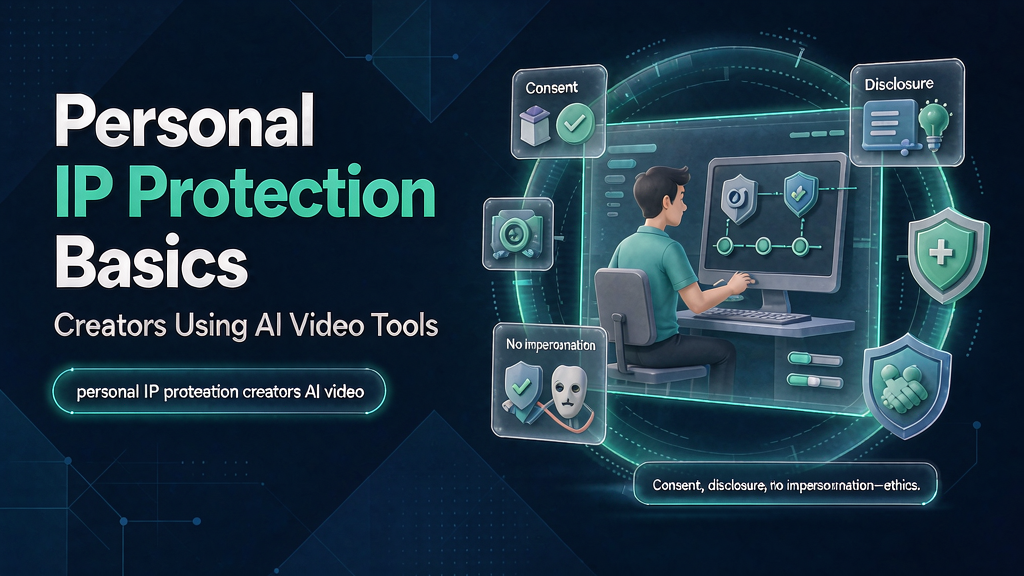
Personal IP Protection Basics for Creators Using AI Video Tools To protect your personal intellectual property (IP) when using AI video tools, it's essential to understand the potential risks involved, such as training ambiguity, likeness cloning, and accidental infringement, and take proactive steps to mitigate them. By implementing practical hygiene measures and being mindful of IP ownership, creators can minimize risks and ensure the integrity of their work. This article provides a comprehensive checklist for creators to follow, in consultation with counsel, to safeguard their IP.
What Are the Key IP Risks for Creators Using AI Video Tools? The use of AI video tools introduces several IP risks that creators need to be aware of, including: Training ambiguity: the potential for AI tools to learn from and replicate copyrighted material Likeness cloning: the creation of digital duplicates of a person's likeness or voice Prompt leakage: the unintended disclosure of sensitive information through AI prompts Accidental infringement: the unintentional use of copyrighted material or trademarks
How Can Creators Protect Their IP When Using AI Video Tools? To protect their IP, creators should: 1. Read and understand the terms of service (ToS) for AI video tools, particularly clauses related to training-on-your-content 2. Avoid pasting unpublished manuscripts or sensitive information into AI prompts 3. Keep a local source-of-truth for owned materials, such as storyboards and stills 4. Use watermarks or register high-value launches where recommended by counsel 5. Contract freelancers with IP assignment and tool-use clauses
What Are the Best Practices for Managing Likeness and Voice in AI Video Tools? When creating digital twins or using voice clones, creators should: Control access to these digital assets Disclose usage and intentions Ban third-party clones in brand deals Treat voice clones like signing keys, with strict access controls
How Can Creators Avoid Infringement When Generating Content with AI Tools? To avoid infringement, creators should: Avoid prompting AI tools to generate content "in the style of" living artists without guidance Not recreate competitor UI or trademarked characters * Use original plates and diagrams
What Should Creators Include in Sponsorship and Licensing Clauses? When negotiating sponsorship and licensing agreements, creators should: Clearly spell out who owns derivative explainers Define whether brands may edit or modify the content * Disclose whether the AI pipeline is used in content creation
How Can Creators Prepare for Incidents and Disputes? In the event of an incident or dispute, creators should: Document publish dates and source materials Keep a record of concept development, including storyboards and stills * Be prepared to demonstrate originality of expression, with dated records and artifacts
What Is a Production Process That Helps with IP Protection? A storyboard-first workflow can help clarify what was created and when, providing a clear audit trail for IP protection. By keeping concept development, stills, and Reels organized, creators can demonstrate operational IP hygiene and reduce the risk of disputes.
Comparison of IP Protection Measures | Measure | Description | Importance | | --- | --- | --- | | Read ToS | Understand training-on-your-content clauses | High | | Local source-of-truth | Keep owned materials organized and secure | Medium | | Watermark or register | Protect high-value launches | High | | Contract freelancers | Ensure IP assignment and tool-use clauses | Medium | | Control digital twins | Manage access and disclosure | High | | Avoid infringement | Use original content and avoid prompts that may infringe | High |
Decision Table for IP Protection | Risk | Measure | Effectiveness | | --- | --- | --- | | Training ambiguity | Read ToS, opt out of training-on-your-content | High | | Likeness cloning | Control access to digital twins, disclose usage | Medium | | Prompt leakage | Avoid pasting sensitive information into AI prompts | High | | Accidental infringement | Use original content, avoid prompts that may infringe | High |
Ship Checklist for IP Protection 1. Review ToS for AI video tools 2. Organize owned materials, including storyboards and stills 3. Watermark or register high-value launches 4. Contract freelancers with IP assignment and tool-use clauses 5. Control access to digital twins and voice clones 6. Document publish dates and source materials 7. Keep a record of concept development, including storyboards and stills 8. Disclose AI pipeline usage in sponsorship and licensing agreements
Worked Example: Protecting IP in an Explainer Video Production Suppose a creator is producing an explainer video series using AI video tools. To protect their IP, they: Read and understand the ToS for the AI video tool, opting out of training-on-your-content clauses where necessary Keep a local source-of-truth for owned materials, including storyboards and stills Use watermarks on high-value launches, as recommended by counsel Contract freelancers with IP assignment and tool-use clauses Control access to digital twins and voice clones, disclosing usage and intentions Document publish dates and source materials, keeping a record of concept development By following these steps, the creator can minimize IP risks and ensure the integrity of their work.
Second Worked Example: Protecting IP in a Social Media Campaign Suppose a creator is launching a social media campaign using AI-generated content. To protect their IP, they: Conduct a thorough search for existing trademarks and copyrights Use original content and avoid prompts that may infringe on existing IP Contract influencers and freelancers with IP assignment and tool-use clauses Control access to digital assets, including social media accounts and content calendars Document publish dates and source materials, keeping a record of concept development Disclose AI pipeline usage in sponsorship and licensing agreements By taking these steps, the creator can protect their IP and avoid potential disputes or incidents.
Failure Modes and Fixes In the event of an IP-related incident or dispute, creators should be prepared to take swift action to mitigate the damage. Some common failure modes and fixes include: Failure to document concept development: Fix by keeping a record of storyboards, stills, and Reels, and documenting publish dates and source materials. Inadequate control over digital twins: Fix by controlling access to digital assets, disclosing usage and intentions, and treating voice clones like signing keys. Accidental infringement: Fix by using original content, avoiding prompts that may infringe, and conducting thorough searches for existing trademarks and copyrights. Disputes over IP ownership: Fix by clearly spelling out who owns derivative explainers, defining whether brands may edit or modify the content, and disclosing AI pipeline usage in sponsorship and licensing agreements. By being aware of these potential failure modes and taking proactive steps to mitigate them, creators can protect their IP and ensure the integrity of their work.
Related reading on Scro
- Personal Brand IP Monetization: How Creators Turn Expertise Into Income
- AI Video Tools Comparison for Marketing: Runway, Pika, Kling, and Storyboard Platforms
- Best AI Explainer Video Tools for Marketing Teams in 2026
- Best AI Video Tools for Faceless YouTube and Reels Channels
Soft close — storyboard-first workflow
Prefer concept → storyboard → approve stills → render over prompt-and-pray generation. If you want that loop productized, try Scro. The operating rules above still apply with any stack that lets you lock beats before motion credits burn.